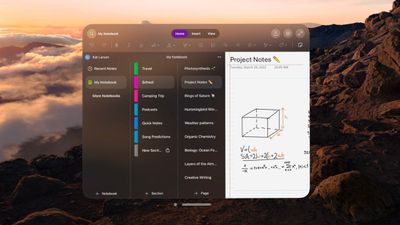
Microsoft today introduced a version of OneNote that is designed to run on the Apple Vision Pro headset. OneNote for Vision Pro was created for visionOS, and it includes many of the features that are available on OneNote for iPad.
The app can be used to write memos, notes, and digital notebooks, and there are options to sync content to OneDrive for access across multiple platforms. There is support for tags like Important and To Do, and notes can be protected with a password.
OneNote on Vision Pro works hands-free or with a connected keyboard and mouse. In the future, Microsoft plans to add support for Copilot, two-factor authentication, and inserting images from the camera or the Photos app.
OneNote can be downloaded from the visionOS App Store as of today. It works with personal and work accounts that are not managed by an organization.
Microsoft has made many of its apps available on the Vision Pro, including Teams, Word, Excel, PowerPoint, and Outlook.
Apple is currently testing iOS 17.5, the fifth major update to the iOS 17 operating system that came out last September. Like iOS 17.4, iOS 17.5 primarily focuses on regulatory changes in the European Union, but there are a few other features worth noting.
This guide aggregates everything that's been found during the iOS 17.5 beta testing period so far.
App Downloads From Websites (EU Only)
iOS 17.5 introduces support for web-based app distribution in the European Union, allowing developers to offer their apps for download directly on their websites. Apps can be downloaded from websites in the EU as of the second beta.
As with the iOS 17.4 changes that added alternative app marketplaces, this functionality is limited to the iPhone and can only be used in the EU. Developers need to be a member of the Apple Developer Program for two continuous years or more and must have more than one million first installs on iOS in the prior year to offer an app for download.
All apps downloaded from websites onto iPhones must submit to Apple's notarization process, and while there is no commission to pay to Apple, Apple does charge a 0.50 euro Core Technology Fee.
Podcast Widget
The Podcasts widget that can be added to the Home Screen or the Lock screen now features a background that changes depending on the art of the podcast that's being played.
Mobile Device Management
MDM solutions are able to enforce a beta version during automated device enrollment. Automated device enrollment is designed to simplify initial device setup.
Apple News+
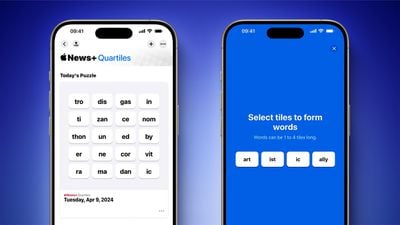
Apple News+ includes a new daily word game called Quartiles. The game requires players to combine tiles to form words and earn points. Quartiles is limited to customers who have a paid Apple News+ subscription.
Code Changes
There are several changes to the code in iOS 17.5, and these hint at features that could come later in the beta or when the update launches.
Third-Party Item Tracker Alerts
iOS 17.5 references support for third-party item trackers, a feature that Apple has been working on since last year.
Apple and Google developed a cross-platform solution for unwanted tracking alerts, and it looks like iOS 17.5 will let iPhone users know when a third-party tracker is nearby. "You can disable this item and stop it from sharing its location with the owner. To do this, follow the instructions provided on a website by the manufacturer of this item," reads some of the code in the update.
FaceTime may gain a "Block All Participants" option for group FaceTime calls, possibly for blocking spam. This feature does not appear to be functional as of yet.
iPad Battery Health
There are references to a Battery Health menu on the iPad, a feature that is not currently available. This is not an option in the beta as of now, and it may be limited to the new iPads that Apple is rumored to be introducing in May.
The Battery Health menu would likely show maximum remaining capacity and charge cycle count, similar to the Battery Health menu on iPhone.
New Apple Pencil
There are references to an Apple Pencil "V4" in the iOS 17.5 code, and there are also mentions of a "squeeze" feature that could perhaps add support for completing actions with a squeeze on the new Apple Pencil.
Release Date
Apple is likely to release iOS 17.5 in early May. New iPads are planned for May, so the update could come out right around when Apple debuts the new iPad models.
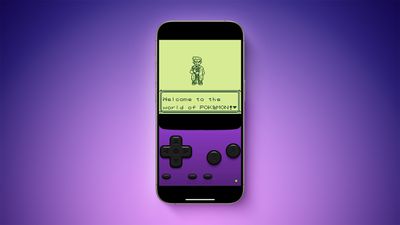
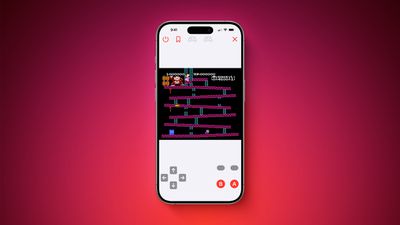
The first approved Nintendo Entertainment System (NES) emulator for the iPhone and iPad was made available on the App Store today following Apple's rule change. The emulator is called Bimmy, and it was developed by Tom Salvo.
On the App Store, Bimmy is described as a tool for testing and playing public domain/"homebrew" games created for the NES, but the app allows you to load ROMs for any NES games available for download online, such as Super Mario Bros. and Donkey Kong. Nintendo released the NES game console in 1985, so some of these games are nearly 40 years old. On its website, Nintendo says "downloading of pirate copies of Nintendo games is illegal."
The release of Bimmy comes after Apple removed Game Boy emulator iGBA from the App Store for ripping off another emulator known as GBA4iOS, which was distributed outside the App Store. Apple said it had approved of iGBA's functionality prior to learning that the app was a knockoff, suggesting that emulators for older Nintendo game consoles are permitted on the App Store, and Bimmy seems to be the first proof of that.
Apple updated its App Review Guidelines to permit retro game console emulators earlier this month. Apple says developers of emulators are "responsible for all such software" offered in the app, including compliance with "all applicable laws."
Update: In a post on the MacRumors Forums, the developer of Bimmy said they decided to remove the app from the App Store. "No one reached out to me pressuring me to remove it," he said. "But I'd rather not have the risk."
Apple will launch its next Apple Watch activity challenge on Saturday, April 22 in celebration of Earth Day.
To complete the challenge, Apple Watch owners will need to complete a workout that lasts for 30 minutes or longer, with the activity recorded through the Workout app or an app that adds information to the Health app.
Let's get moving for the planet. On April 22, do any workout for 30 minutes or more to earn this award. Record it with the Workout app or any app that adds to Health.
Apple Watch owners who earn the award will unlock a dedicated in the Fitness app, plus they will get a series of animated stickers that can be used in the Messages and FaceTime apps.
After the Earth Day challenge, Apple will also launch another challenge for International Dance Day, which takes place on April 29. The Dance Day award can be earned by completing a dance workout that lasts 20 minutes or longer, and it too will unlock a badge and animated stickers.
The April Earth Day challenge and Dance Day challenge follow the the February heart month challenge, and for those curious, it does appear that Apple has trimmed down the number of activity challenges that it is offering in 2024.
With the second beta of iOS 17.5 that's available today, iPhone users located in the European Union are able to download apps directly from the websites of Apple app developers without going through the App Store or an alternative app marketplace.
Since March, Apple has been working on support for downloading apps from websites, and the feature is finally ready for testing. Apple started letting developers offer their apps through alternative app marketplaces in the EU in iOS 17.4, but the website option adds a new method for acquiring apps.
App developers that want to offer iOS apps from their websites in the European Union need to meet specific criteria to ensure the safety of iPhone users. Apps must undergo Apple's Notarization process, and developers need to be a member of the Apple Developer Program for two continuous years or more.
Only apps that have had one million annual first installs or more on iOS in the EU in the prior year are eligible for download from a website. Developers that meet these terms will be able to use an API for web-based app downloads. Apps downloaded through the web using the API can be backed up, restored, and updated as standard apps can.
When an iPhone user in the EU visits a website to install an app, users will need to grant express permission for that developer to install apps to Settings. A system sheet will display the app name, developer name, app description, screenshots, and more.
Developers are only able to offer apps from their developer account, and are required to publish transparent data collection policies so users are aware of how data is collected and used. Apps distributed outside of the App Store need to provide customer support, refunds, and offer a way to manage apps.
While developers do not have to pay a cut of app sales to Apple for apps distributed through websites, there is a 0.50 euro Core Technology Fee for each annual install over one million in the past 12 months. The fee is waived for nonprofit organizations, accredited educational institutions, and government entities.
Downloading apps outside of the App Store is limited to iPhone users who are located in the European Union, and Apple has implemented these options to comply with the EU's Digital Markets Act. The functionality is not available on the iPad, nor is it open to iPhone users in other countries.
Apple today seeded the second betas of upcoming iOS 17.5 and iPadOS 17.5 updates to developers for testing purposes, with the software coming two weeks after Apple released the first betas.
Registered developers are able to opt into the betas by opening up the Settings app, going to the Software Update section, tapping on the "Beta Updates" option, and toggling on the iOS 17 or iPadOS 17 Developer Beta. An Apple ID associated with a developer account is required to download and install the beta.
Most of the features that Apple promised would be coming in iOS 17 have now been released, but iOS 17.5 adds additional app ecosystem changes in the European Union. App developers can offer apps for download on the iPhonedirectly from their websites, in addition to through app marketplaces.
There are also code changes that hint at new Apple Pencils and a Battery Health feature for the iPad, with more information on what's new available in our iOS 17.5 beta features post.
Apple today seeded the second beta of an upcoming macOS Sonoma 14.5 update to developers, with the software coming two weeks after Apple released the first beta.
Registered developers can opt-in to the beta through the Software Update section of the System Settings app. Note that an Apple ID associated with an Apple Developer account is required to get the beta.
We don't yet know what might be included in macOS Sonoma 14.5, and no new features were found in the first developer beta.
Apple today released the second beta of an upcoming visionOS 1.2 update to developers, allowing them to test new features ahead of the software seeing a public launch. The second visionOS 1.2 beta comes two weeks after the release the first beta.
The visionOS beta can be downloaded by going to the Settings app on the device and toggling on developer betas. A registered developer account is required, and Apple recommends making a backup before installing new software.
Apple may make further improvements to Personas, EyeSight, and other features with visionOS 1.2, but no major new additions were found in the first beta.
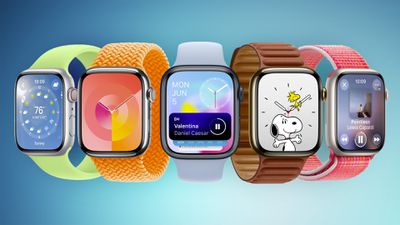
Apple today seeded the second beta of an upcoming watchOS 10.5 update to developers for testing purposes, with the beta coming two weeks after the release of the first beta.
To install the watchOS 10.5 update, developers need to open the Apple Watch app, go to the Software Update section under "General" in Settings, and toggle on the watchOS 10 Developer Beta. An Apple ID linked to a developer account is required.
Once beta updates have been activated, watchOS 10.5 can be downloaded under the same Software Update section. To install software, an Apple Watch needs to have 50 percent battery life and it must be placed on an Apple Watch charger.
We don't yet know what's included in watchOS 10.5, and there were no new features found in the first beta.
Apple today seeded the second beta of an upcoming tvOS 17.5 to developers for testing purposes, with the beta coming two weeks after the release of the first beta.
Registered developers are able to download the tvOS 17.5 update by opting in to the beta through the Settings app on the Apple TV. A registered developer account is required.
tvOS software updates are often minor in scale compared to other operating system updates, focusing primarily on smaller improvements rather than outward-facing changes. We don't yet know what's included in tvOS 17.5.
Apple shares some information on tvOS releases in its tvOS support document, which is updated after each tvOS launch, but Apple does not provide notes during beta testing.
Though we don't always know what's new in tvOS betas, we let MacRumors readers know when new updates are available so those who are developers can download new software upon release.
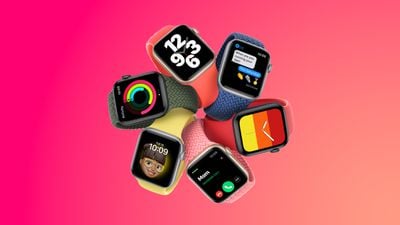
Apple's 40mm GPS Apple Watch SE is on sale for $189.00 today on Amazon, down from $249.00. This is just $10 higher compared to its all-time low price on the wearable. This deal is available in the Silver, Midnight, and Starlight Aluminum Case options, and only Amazon has the discount.
Note: MacRumors is an affiliate partner with Amazon. When you click a link and make a purchase, we may receive a small payment, which helps us keep the site running.
You can also get the 44mm GPS Apple Watch SE on sale right now, available for $219.00 on Amazon, down from $279.00. This is another near all-time low price that's just $10 away from the lowest price on the Apple Watch SE, and it's available in Midnight and Starlight Aluminum options.
Additionally, both cellular models have hit record low prices this week on Amazon. The 40mm cellular Apple Watch SE is on sale for $239.00, down from $299.00, and the 44mm cellular model is on sale for $269.00, down from $329.00. You can find these all-time low prices available in multiple colors right now on Amazon.
This model of the Apple Watch SE launched in September 2022 and remains Apple's most affordable Apple Watch. The Apple Watch SE lacks some of the upgraded features you'll find in some Series 9 or Ultra 2 models, like temperature sensing and ECG functionality, but it will otherwise provide you with all key Apple Watch features, and at the cheapest price possible.
Be sure to visit our full Deals Roundup to shop for even more Apple-related products and accessories.
Apple today shared a new iPhone ad called "Goodbye Leather" on its YouTube channel in the U.K., months after the company controversially switched from leather to a much-criticized "FineWoven" fabric material for accessories.
Apple discontinuing leather accessories for environmental benefits was a noble aspiration, but FineWoven accessories have been very poorly received. Just days after the first FineWoven cases were released for the iPhone, some customers and media outlets complained about the fabric exterior being prone to scratches and stains. A photo of a FineWoven case with a misaligned USB-C port cutout also surfaced.
Image Credit: Joanna Stern/The Wall Street Journal
"The edges are peeling, the fabric is scratched up like an old CD and it's browning like a rotten banana," she wrote, in her Tech Things newsletter. "I've been waiting for the CDC to show up at my house to declare it a biomedical concern."
Apple has yet to comment on FineWoven criticism, and it remains to be seen if the company discontinues the line or improves the material in any way.
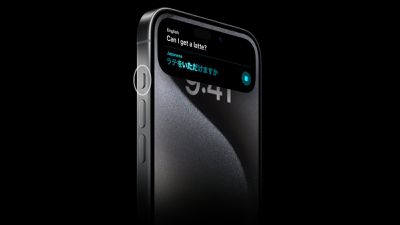
Last September, Apple's iPhone 15 Pro models debuted with a new customizable Action button, offering faster access to a handful of functions, as well as the ability to assign Shortcuts. Apple is poised to include the feature on all upcoming iPhone 16 models, so we asked iPhone 15 Pro users what their experience has been with the additional button so far.
The Action button replaces the switch that activates Ring and Silent on Apple's iPhone 15 Pro models, while the standard iPhone 15 and iPhone 15 Plus models retain the traditional Ring/Silent switch. By default, the Action button still activates these two functions via a long press, but users can also make it activate a range of other functions, including quickly opening the camera app or enabling the flashlight, activating Voice Memos, Focus modes, Translate, and accessibility features like Magnifier.
Of around 7,000 MacRumors readers who responded to our poll on social media, just over half (50.6%) said they often forgot the Action button is even there, while over a quarter of respondents (26.8%) said they use the Action button "occasionally." Based on readers who commented, most occasional users assigned the camera or flashlight to the Action button – functions that are also easily accessible via the Lock screen. A subsection of users in the same category said they have the Action button set to activate/deactivate Mute, to mimic the physical Mute switch it replaced.
Some respondents (12.6%) agreed with the description that the Action button is a "game changer." Most users in this category used it to activate custom Shortcuts, which allowed for novel uses like skipping forward in podcasts, adding to-dos, prompting ChatGPT, activating smart lights, or opening a folder. Some in this category simply appreciated the fact that it saved them time accessing more standard functions that would otherwise involve navigating through onscreen menus.
The rest of our poll respondents (10%) agreed that the Action button was something of a "volume decoy," implying that they often pressed it by accident when they intended to adjust audio levels via the volume buttons, usually when their iPhone was in a pocket or purse.
With the Action button introduced on the iPhone 15 Pro set to expand to all models later this year, we want to hear from current users: Does it make your iPhone life easier?
— MacRumors.com (@MacRumors) April 15, 2024
Our social media poll represents a small, self-selecting cohort of iPhone 15 Pro users. It is also an example of convenience sampling, and by no means statistically sound. Even so, it seems the case could be made that many people have had trouble finding a dedicated use case for the Action button.
Assigning the button to the camera appears to be the most popular way to increase the likelihood that it gets used. Launching the camera app like this avoids having to press or swipe the Lock Screen or select the Camera app from the Home screen. However, Apple is rumored to be adding a "Capture button" to the iPhone 16 for video recording, so the Action button might get less useful for those who use it for this purpose.
Meanwhile, anecdotal evidence suggests there is a fair amount of frustration among "power users" that Apple has not added more flexibility to the way the Action button works. Currently the button only responds to a long press, but more sophisticated iPhone users want a built-in ability to set different customizations for short presses, double-presses, and triple presses.
Ahead of Earth Day on April 22, Apple has added a banner to its website that reminds customers they can recycle their Apple devices "for free" with the company's recycling partners. The process can be initiated on Apple's trade-in page in many countries, with customers able to submit a form to receive a prepaid shipping label for their devices.
"We'll recycle your Apple devices, cables, cases, accessories, and other similar electronics for free," says Apple. "You'll help protect the earth's precious resources and reduce waste as we work toward a better future for the planet."
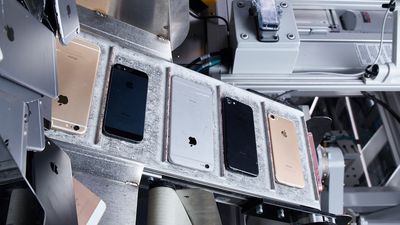
On a related note, Apple today shared a new "Recycling Robots" video on its YouTube channel in the U.K. that says Apple's recycling robots are now able to recover recyclable materials from a total of 23 different iPhone models.
"Our custom recycling robot Daisy can disassemble 23 different iPhone models to recover crucial materials like gold and rare earth elements," says Apple. "Robot Dave extracts tungsten from Taptic Engines, while robot Taz takes care of audio modules. Together, they're leading the way in recovering recycled materials for the next generation of products."
Apple will likely release its 2024 Environmental Progress Report soon, and share other Earth Day announcements over the coming days.
Spotify's elusive lossless music experience is being teased again, this time based on code uncovered by The Verge in recent builds of the Spotify app for Android.
More than three years have elapsed since Spotify announced its intention to offer a "HiFi" premium option that would give users access to a catalog of CD-quality music tracks. Originally the company said the tier would go live by the end of 2021, but a shift in the wider streaming market upended that idea.
Apple Music has since rolled lossless listening into its standard subscription price, while Amazon stopped charging extra for its lossless music library. The moves effectively kiboshed Spotify's original strategy of marketing an exclusively lossless HiFi tier.
That said, it doesn't sound as if lossless is coming as a free perk. The latest rumors suggest that Spotify now aims to offer lossless audio playback in an optional "Music Pro" add-on that will also include new DJ remix features, which let subscribers "speed up, mash-up, and otherwise edit" tracks from their favorite artists, according to The Wall Street Journal.
Spotify will likely make some basic remixing tools available as part of its Premium subscription (currently $10.99 a month, or $5.99 for students), but more powerful tools will be part of its "Music Pro" add-on. Where recent rumors of a new top "Supremium" tier fit in is unclear.
The intended price of the premium add-on has not been revealed, but given that major rivals include lossless in their standard plans, expecting subscribers to pay anything more than a nominal fee may be a big ask.
Apple will allegedly offer both the iPhone 16 Pro and iPhone 16 Pro Max with a minimum 256GB of storage, doing away with the 128GB starting option on its smaller Pro model for the first time.
Currently, Apple's 6.1-inch iPhone 15 Pro starts at $999 and comes with the minimum 128GB of storage, while the 6.7-inch iPhone 15 Pro Max starts at $1,199 with a minimum 256GB of storage.
However, according to The Mac Observer, Apple will bump up the base storage of the upcoming iPhone 16 Pro to 256GB to match the minimum capacity of the larger iPhone 16 Pro Max, while the starting price of Apple's smaller Pro model will remain at $999.
The source of the alleged "leak" has no recent track record for accurate Apple rumors, so we are filing this one under sketchy. Having said that, the claim is not outside the realm of possibility. If Apple drops 128GB as the base on the iPhone 16 Pro, that will leave three Pro storage options across the board: 256GB, 512GB, and 1TB.
In 2018, Apple's iPhone X came with 64GB, an entry-level storage tier that persisted in successive premium device generations until the iPhone 12 Pro in 2020, when Apple adopted 128GB as the new baseline. The next year saw all iPhone 13 models offered with a minimum 128GB. If Apple makes 256GB the new minimum across its premium devices this year, we could well see it reach all models in 2025.
At the other end of the scale, a rumor in January out of Korea claimed that both iPhone 16 Pro models will be available with double the maximum storage capacity as the iPhone 15 Pro devices, increasing from 1TB to 2TB.
The maximum storage increase is said to be a result of Apple's switch to higher-density Quad-Level Cell (QLC) NAND flash for higher storage models. Apple's use of QLC NAND could allow Apple to fit more storage into a smaller space and it is less expensive than Triple-Level Cell (TLC) NAND, which current iPhones use.
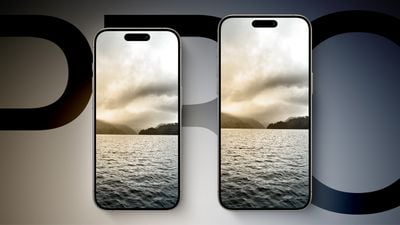
This year's iPhone 16 Pro and iPhone 16 Pro Max are rumored to be getting bigger display sizes, increasing to 6.27- and 6.86-inches, respectively. For comparison, the iPhone 15 Pro and iPhone 15 Pro Max are equipped with 6.1-inch and 6.7-inch displays, respectively. The new display sizes will be the largest ever for the iPhone, and should also increase the physical space for internal components and parts.
Article corrected to reflect iPhone 12 Pro jump to 128GB base storage. Apologies for the original error.
Adobe today debuted several new AI features for Premiere Pro, software designed for professional video editing. Adobe's Premiere Pro is set to gain useful editing functions powered by generative AI, which will let video editors do more with less work.
With a Generative Extend feature, Premiere Pro will be able to add frames to make video clips longer, allowing for properly timed edits and smooth transitions by extending a scene.
Objects in videos will also be able to be added or removed through smart selection and tracking tools. Adobe says that video editors can do things like remove an unwanted item, change an actor's wardrobe, or add set dressings like paintings on the wall or plants on a desk.
Perhaps the most interesting new feature is an option to create new video footage directly within Premiere Pro using a text to video feature. Users will be able to type text into a prompt or upload images to create video, and the resulting clips can be used for B-roll, creating storyboards, and more.
Adobe plans to introduce these generative AI tools later in 2024.
Apple has its own professional video editing software, Final Cut Pro. Final Cut Pro is a Premiere Pro competitor, and as of now, it is lacking in the AI department. Apple has not announced any AI features for Final Cut Pro, but with AI capabilities rumored to be coming to multiple apps in iOS 18 and macOS 15, we could perhaps see some new AI feature additions for Final Cut Pro.
Social media platform X (formerly Twitter) will soon begin charging new users "a small fee" for posting content and liking, replying, and bookmarking tweets, according to Elon Musk.
X Daily News, a feed that posts X updates, today noticed that text strings on the website have been updated to mention a small annual fee that new users will need to pay in order to access the social network.
Musk said in response that the fee for new users is "the only way to curb the relentless onslaught of bots."
The fee has previously been tested in New Zealand and the Philippines, and Musk says that it is applicable only to those who are new to Twitter. When a new user signs up, the user will need to pay the fee, or wait for three months to be able to engage on the network. The updated language on the Twitter site:
New accounts are required to pay a small annual fee before you're able to post, like, bookmark, and reply. This is to reduce spam and create a better experience for everyone. You can still follow accounts and browse X for free.
The text does not mention being able to post for free after three months, but Musk confirmed that "write actions" would be free after that time period.
It is unclear how the policy will stop spam accounts and bots, as spammers will be able to pay the fee or simply create multiple accounts and wait to be able to post. Regular users, meanwhile, could be discouraged from using X due to the extra step and the fact that other social networks are free.
The fee appears to be around $1, as it costs $1.75 NZD in New Zealand. The pay-for-access policy has not yet been implemented outside of New Zealand and the Philippines.
Musk said that fake accounts also use up "the available namespace" limiting the "good handles." X has freed up over a million usernames so far, and will "free up tens of millions in the coming weeks."

























 Note: MacRumors is an affiliate partner with Amazon. When you click a link and make a purchase, we may receive a small payment, which helps us keep the site running.
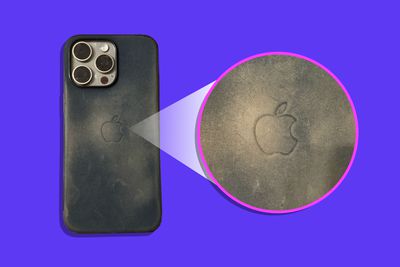 Image Credit: Joanna Stern/The Wall Street Journal