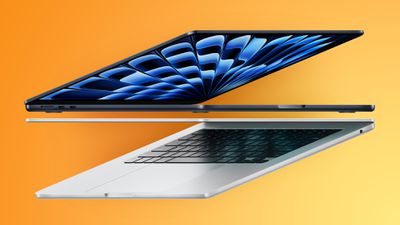
Amazon is back with a big sale on the newest 24-inch M3 iMac, including both 256GB and 512GB models. This time around, the deals do not require any sort of coupon in order to see the final discounted price.
Note: MacRumors is an affiliate partner with Amazon. When you click a link and make a purchase, we may receive a small payment, which helps us keep the site running.
Starting with the 8-core GPU/256GB M3 iMac, this model is available for $1,199.00 in two colors, down from $1,299.00. Amazon also has the 10-core GPU/256GB M3 iMac on sale for $1,409.00, down from $1,499.00. This one is available in four colors.
Note: You won't see the deal price until checkout.
Lastly, the 10-core GPU/512GB M3 iMac has hit $1,594.00 in three colors, down from $1,699.00. All of Amazon's deals today are solid second-best prices on the M3 iMac, and right now many of the computers can be delivered as soon as this Friday, April 26 if you have a Prime membership.
Apple launched the M3 iMac back in October 2023, bringing significant speed and efficiency improvements with the upgrade from the M1 to the M3 chip. Otherwise, there are no major design changes to the newest iMac model. Keep up with all of this week's best discounts on Apple products and related accessories in our dedicated Apple Deals roundup.
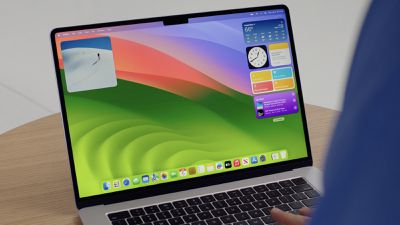
Apple today seeded the third beta of an upcoming macOS Sonoma 14.5 update to developers, with the software coming a week after Apple released the second beta.
Registered developers can opt-in to the beta through the Software Update section of the System Settings app. Note that an Apple ID associated with an Apple Developer account is required to get the beta.
We don't yet know what might be included in macOS Sonoma 14.5, and no new features were found in the first two developer betas.
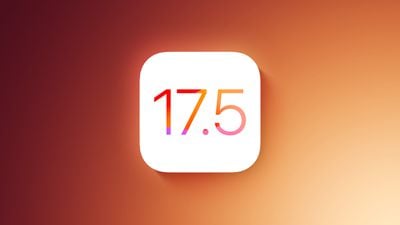
Apple today seeded the third betas of upcoming iOS 17.5 and iPadOS 17.5 updates to developers for testing purposes, with the software coming a week after Apple released the second betas.
Registered developers are able to opt into the betas by opening up the Settings app, going to the Software Update section, tapping on the "Beta Updates" option, and toggling on the iOS 17 or iPadOS 17 Developer Beta. An Apple ID associated with a developer account is required to download and install the beta.
Most of the features that Apple promised would be coming in iOS 17 have now been released, but iOS 17.5 adds additional app ecosystem changes in the European Union. App developers can offer apps for download on the iPhonedirectly from their websites, in addition to through app marketplaces.
There are also code changes that hint at new Apple Pencils and a Battery Health feature for the iPad, with more information on what's new available in our iOS 17.5 beta features post.
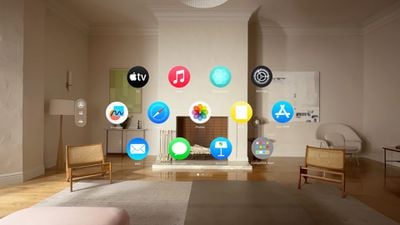
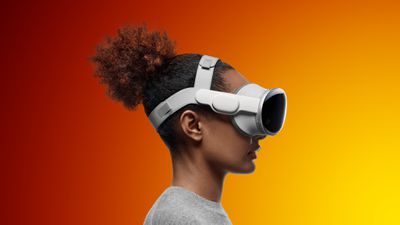
Apple today released the third beta of an upcoming visionOS 1.2 update to developers, allowing them to test new features ahead of the software seeing a public launch. The third visionOS 1.2 beta comes one week after the release the second beta.
The visionOS beta can be downloaded by going to the Settings app on the device and toggling on developer betas. A registered developer account is required, and Apple recommends making a backup before installing new software.
Apple may make further improvements to Personas, EyeSight, and other features with visionOS 1.2, but no major new additions were found in the first two betas.
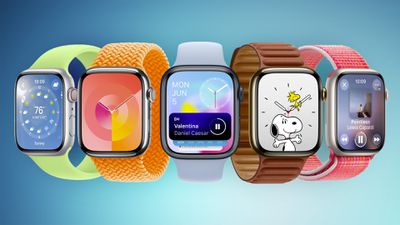
Apple today seeded the third beta of an upcoming watchOS 10.5 update to developers for testing purposes, with the beta coming a week after the release of the second beta.
To install the watchOS 10.5 update, developers need to open the Apple Watch app, go to the Software Update section under "General" in Settings, and toggle on the watchOS 10 Developer Beta. An Apple ID linked to a developer account is required.
Once beta updates have been activated, watchOS 10.5 can be downloaded under the same Software Update section. To install software, an Apple Watch needs to have 50 percent battery life and it must be placed on an Apple Watch charger.
We don't yet know what's included in watchOS 10.5, and there were no new features found in the first two beta updates.
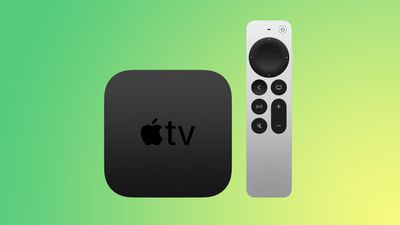
Apple today seeded the third beta of an upcoming tvOS 17.5 to developers for testing purposes, with the beta coming a week after the release of the second beta.
Registered developers are able to download the tvOS 17.5 update by opting in to the beta through the Settings app on the Apple TV. A registered developer account is required.
tvOS software updates are often minor in scale compared to other operating system updates, focusing primarily on smaller improvements rather than outward-facing changes. We don't yet know what's included in tvOS 17.5.
Apple shares some information on tvOS releases in its tvOS support document, which is updated after each tvOS launch, but Apple does not provide notes during beta testing.
Though we don't always know what's new in tvOS betas, we let MacRumors readers know when new updates are available so those who are developers can download new software upon release.
Apple has dropped the number of Vision Pro units that it plans to ship in 2024, going from an expected 700 to 800k units to just 400k to 450k units, according to Apple analyst Ming-Chi Kuo.
Orders have been scaled back before the Vision Pro has launched in markets outside of the United States, which Kuo says is a sign that demand in the U.S. has "fallen sharply beyond expectations." As a result, Apple is expected to take a "conservative view" of headset demand when the Vision Pro launches in additional countries.
Kuo previously said that Apple will introduce the Vision Pro in new markets before the June Worldwide Developers Conference, which suggests that we could see it available in additional areas in the next month or so.
Apple is expecting Vision Pro shipments to decline year-over-year in 2025 compared to 2024, and the company is said to be "reviewing and adjusting" its headset product roadmap. Kuo does not believe there will be a new Vision Pro model in 2025, an adjustment to a prior report suggesting a modified version of the Vision Pro would enter mass production late next year.
In a February report, Kuo said that Apple was working to improve the efficiency of production and supply change management, with little change to the product specifications and user experience. At the time, Kuo estimated that we would not see a Vision Pro with significant updates until 2027.
Kuo believes that Apple needs to work to address the lack of key applications, price, and comfort without impacting user experience. Poor Vision Pro sales is expected to impact the growth of pancake lenses and the adoption of microOLED display technology in small-sized consumer electronics.
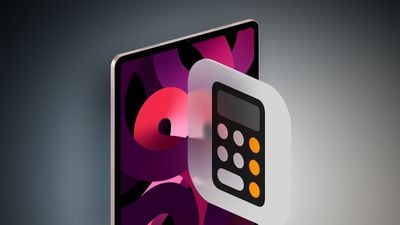
Apple is finally planning a Calculator app for the iPad, over 14 years after launching the device, according to a source familiar with the matter.
iPadOS 18 will include a built-in Calculator app for all iPad models that are compatible with the software update, which is expected to be unveiled during the opening keynote of Apple's annual developers conference WWDC on June 10.
The lack of an official Calculator app on the iPad has been a long-running meme on social media, as users have waited for its arrival. In the meantime, iPad users have relied on calculator apps in the App Store, such as PCalc and Calcbot.
AppleInsider last week reported that macOS 15 will feature a revamped Calculator app with integration with the Notes app, a resizable window, a sidebar that lists recent calculations, and more. While we have not independently confirmed those details, it is possible that the updated Mac app will be based on the new iPad app.
The first beta of iPadOS 18 is expected to be released immediately following the WWDC keynote, and the update should be widely released in September.
Now, if only we could get Instagram and WhatsApp for the iPad…
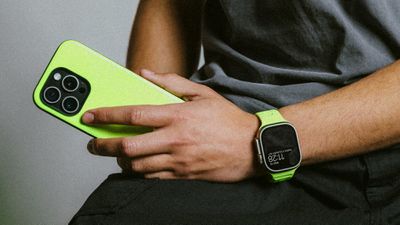
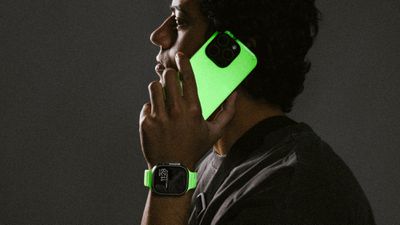
Popular accessory maker Nomad today announced the launch a second-generation glow in the dark band designed for the Apple Watch, with the new version featuring a much more pronounced glow than before.
Nomad says that its Glow 2.0 Sport Band is three times brighter than the prior-generation version, and it did indeed have a strong and long lasting glow in our testing. In the light, the band is a soft green color, but in the dark, it shifts to a bright, neon green color. Nomad said that it experimented with more than two dozen variations to get the color and glow of the band correct.
To go along with the Glow 2.0 Sport Band, Nomad is also introducing a Glow Sport Case, which is its first glow in the dark iPhone case option. It has the same light green color in the light, and it too turns a neon green to match the band. It is worth noting that glow in the dark products need light exposure, so the intensity and length of the glow depend on the light exposure the watch and case receive during the day.
The Glow 2.0 Sport Band is made from the same FKM fluoroelastomer rubber as Nomad's other Sport Bands, so if you've tried one of those, this is the same general feel. It's thicker and more rigid than Apple's sport band, and the lack of flex makes it a little less comfortable, but it is still overall easy to wear. It is waterproof and sweatproof, so it is ideal for swimming and other activities that involve water. There are holes in the band to keep it from getting too sweaty underneath during heavy activity.
The case is a variation of Nomad's Sport Case, and it is available for the iPhone 15 Pro models. The case itself is glossy, but there is adequate grip that keeps it from being easily dropped, and there is a rubber bumper around the sides and the camera. Buttons are made from aluminum and are easy to press, and it does include support for MagSafe so it works with MagSafe accessories.
Nomad says that its Sport Cases are designed to provide 8-foot drop protection, and the rubber bumper does provide quite a bit of extra cushioning to the area around the display. The case is not as thin as Apple's silicone case, but it does seem to offer good protection, and the glow in the dark feature is fun at night. During the day, the case is a pleasant light green.
The Glow 2.0 Sport Band is priced at $60, while the Glow Sport Case is priced at $50. Both products can be purchased from the Nomad website starting today.
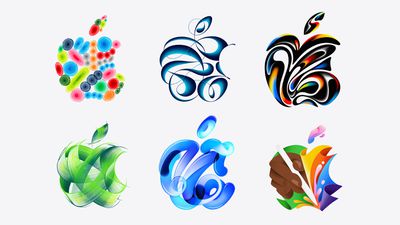
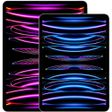
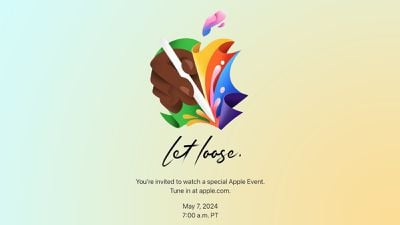
The artistic logos likely allude to the illustration and graphic design capabilities of the iPad Pro and Apple Pencil, both of which are expected to receive a substantial hardware refresh at the event. The main artwork being used to promote the event features the Apple Pencil and Apple CEO Tim Cook today hinted at the importance of the accessory to the event in a new post on X (formerly Twitter):
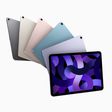
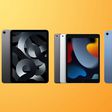
Two new iPad Air models and a redesigned Magic Keyboard accessory are also expected to be unveiled at the event.
The May 7 Apple event will take place at 7 a.m. Pacific Time (10 a.m. Eastern Time), with a live stream to be available on apple.com and on YouTube. The event invitation did not mention an in-person component, with Apple inviting the media to watch online alongside the general public.
Apple has announced it will be holding a special event on Tuesday, May 7 at 7 a.m. Pacific Time (10 a.m. Eastern Time), with a live stream to be available on Apple.com and on YouTube as usual. The event invitation has a tagline of "Let Loose" and shows an artistic render of an Apple Pencil, suggesting that iPads will be a focus of the event.
Apple has not released any new iPads since late 2022, so this event has been a long time coming. The event will take place just over a month before Apple's annual developers conference WWDC, which runs from June 10 through June 14.
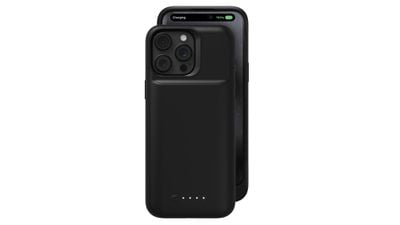
Mophie today announced the launch of Juice Pack battery cases that are designed to work with the iPhone 15 lineup. Like Mophie's prior Juice Pack cases, the latest version attaches to the iPhone to provide a little extra battery life during daily use.
The case comes apart in two pieces so that the iPhone can fit inside, and as the iPhone 15 models have USB-C ports, there is a USB-C charger inside that fits right in to the port. The case also has a USB-C port that can be used for charging the case and the iPhone inside.
Priority goes to the iPhone when charging, so if it's plugged in, it'll charge up first, and then the case itself will also charge. It's a super simple solution for adding extra battery life to your phone on a long day.
The Juice Pack for the iPhone 15 Pro Max that we tested ahead of launch has a 3,000mAh battery, so it's not able to charge an iPhone to full, but it is about an extra half charge. The 15 and 15 Pro Juice Pack models have a 2,400mAh battery inside because they're smaller, but that also delivers about the same 50 percent battery charge. In my testing, I was able to get about an additional 45 percent battery out of the case once I had drained my iPhone battery, so Mophie's estimate seems about right.
Mophie's Juice Pack case is made from a soft-touch material that's pleasant in the hand and it only comes in black. It offers a protective lip around the iPhone's display and camera, and covers all of the buttons and ports for additional protection. There's a bump at the back for the battery, and while the case remains on the slimmer side is not too bulky, it does add some extra weight.
The case is meant to provide protection from a drop of up to six feet, and it feels rugged enough to be able to handle that kind of impact without damage to the iPhone. Mophie says that the extra battery life provides up to 44 hours of talk time and music playback, or up to 11 hours of video playback.
There's a button on the back to turn the Juice Pack on and off and to check charge level with the four LEDs. It's handy to be able to turn it off to control when you want to use up the extra battery life rather than having it charge automatically, but note that you do need to hold it down for a few seconds to get charging to initiate. Mophie has Juice Pack cases for the iPhone 15, iPhone 15 Pro, and iPhone 15 Pro Max, but there is not a model for the iPhone 15 Plus.
Apple is said to be developing its own AI server processor using TSMC's 3nm process, targeting mass production by the second half of 2025.
According to a post by the Weibo user known as "Phone Chip Expert," Apple has ambitious plans to design its own artificial intelligence server processor. The user, who claims to have 25 years of experience in the integrated circuit industry, including work on Intel's Pentium processors, suggests this processor will be manufactured using TSMC's 3nm node.
TSMC is a vital partner for Apple, manufacturing all of its custom silicon chips. The chipmaker's 3nm technology is one of the most advanced semiconductor processes available, offering significant improvements in performance and energy efficiency over the previous 5nm and 7nm nodes.
Apple's purported move toward developing a specialist AI server processor is reflective of the company's ongoing strategy to vertically integrate its supply chain. By designing its own server chips, Apple can tailor hardware specifically to its software needs, potentially leading to more powerful and efficient technologies.
Apple could use its own AI processors to enhance the performance of its data centers and future AI tools that rely on the cloud. While Apple is rumored to be prioritizing on-device processing for many of its upcoming AI tools, it is inevitable that some operations will have to occur in the cloud. By the time the custom processor could be integrated into operational servers in late 2025, Apple's new AI strategy should be well underway.
The Weibo user has a number of accurate previous claims, including that the iPhone 7 would be water-resistant and that the standard iPhone 14 models would continue using the A15 Bionic chip, with the more advanced A16 chip being exclusive to the iPhone 14 Pro models. These predictions were later corroborated by multiple credible sources and proved correct upon the products' release.
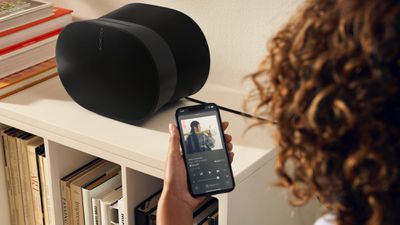
Sonos today unveiled a redesigned Sonos app that is meant to unify an increasingly fragmented streaming market. The app is focused around a customizable home screen that supports more than 100 streaming services, so each user can set up a personalized listening experience.
The home screen layout can be customized, and it displays the services that each user has set up along with controls for accessing content. There are quick access options for recently played songs, podcasts, and books, along with options to browse libraries and see recommendations from preferred services.
Favorite content and services can be pinned in rows to the home screen, and the rows are rearrangeable and customizable. A built-in always-visible search feature allows users to search for artists, songs, podcasts, audiobooks, and more across all of their preferred streaming apps.
Swiping up from the bottom of the home screen allows for a quick visual overview of everything that's playing on connected devices, and there are tools for groping speakers and adjusting volume across the home.
The new Sonos app will be available globally on mobile and through the web on May 7.
iPhone sales in China declined significantly in the first quarter of 2024 as consumers turned to other premium smartphone brands, according to Counterpoint research.
During the first quarter of the year, China's smartphone market experienced modest year-over-year growth of 1.5%, marking the second consecutive quarter of growth. This uptick in sales is largely attributed to strong sales performance from local manufacturers such as Huawei, which achieved a remarkable 69.7% growth compared to the same period last year. This growth was fueled by the launch of Huawei's Mate 60 series, a smartphone lineup that has significantly bolstered the company's dominance in the Chinese premium segment, typically characterized by devices priced over $600.
In contrast, Apple saw its smartphone sales in China plummet by 19.1% year-over-year in the same quarter. Analysts point to Huawei's resurgence as a direct challenge to Apple as the main reason for this, primarily in the premium segment where the two companies compete head-to-head. Counterpoint anticipates that upcoming iPhone models with new color options and AI features could help to rejuvenate Apple's sales in the Chinese market. Looking ahead, the smartphone market in China is projected to see low single-digit growth throughout 2024.
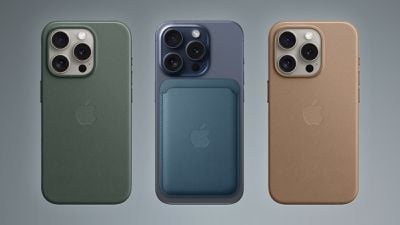
Over the weekend, Apple leaker and prototype collector Kosutami claimed that Apple has decided to halt production of FiveWoven accessories over durability concerns. In a further update, the leaker has now suggested we might yet see one more round of FineWoven products in a season of new colors before Apple finally says farewell to the material for good.
Last September, Apple stopped selling genuine leather accessories in favor of a more environmentally friendly "FineWoven" material. The company describes FineWoven as "luxurious and durable microtwill," and sells FineWoven iPhone cases at $59, MagSafe Wallets at $59, AirTag holders at $35, and Apple Watch bands at $99.
Many customers consider FineWoven products to be subpar compared to the leather Apple cases they replaced, and claim that the fabric is prone to scratches, stains, and discoloration. If today's update is correct, Apple may have to brace itself for more unhappy FineWoven customers.
Kosutami is known for revealing accurate information about FineWoven accessories in the past, so their latest claim should not be discounted. FineWoven accessories in new color options were absent from Apple's spring refresh, so perhaps their swan song could come in September when Apple releases the iPhone 16 lineup.
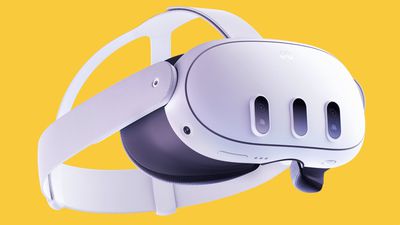
Facebook parent company Meta today announced the upcoming expansion of Meta Horizon OS, a virtual and augmented reality operating system that will be available to third-party hardware manufacturers that want to design their own headsets.
Right now, Meta sells the Quest line of headsets, but the company wants to provide the software for third-party VR and AR products in the future, much like Microsoft offers Windows for all manner of third-party PCs.
Meta Horizon OS is the mixed reality operating system that Meta created for its own Quest headsets, and it has support for eye, face, hand, and body tracking along with passthrough, spatial anchors, scene understanding, and other features. There is a "social layer" that will allow the identities, avatars, and friends of users to move between virtual spaces on different devices.
According to Meta, multiple companies are working on devices that will use Meta Horizon OS. ASUS ROG is developing a performance gaming headset and Lenovo is working on mixed reality devices for productivity, learning, and entertainment. Meta says that it is also creating a limited edition version of Meta Quest in partnership with Xbox.
With the expansion of Meta Horizon OS to third-party hardware manufacturers, Meta is making it easier for any developer to ship VR software on the platform by removing barriers between the Horizon Store and App Lab.
By creating an operating system that can be used by other hardware manufacturers, Meta is inserting itself into the growing AR/VR ecosystem and creating opportunities for it to outpace Apple in mixed reality development. Apple launched the Vision Pro headset earlier this year, but software is lacking given the high price and limited distribution of the device.
According to a report from earlier today, interest in the Vision Pro is already waning at Apple's retail locations with fewer people requesting demos.
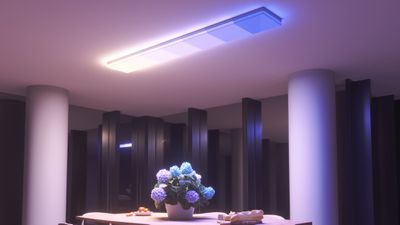
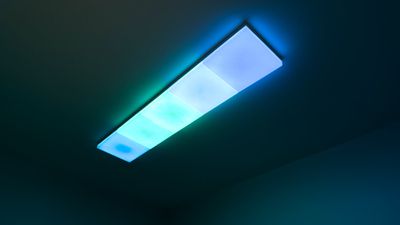
The Nanoleaf Skylight Smarter Kit is Nanoleaf's first hardwired, permanent light, and it's also the first light that Nanoleaf designed specifically to be installed on ceilings.
As with Nanoleaf Light Panels, the Skylight is modular. A 3-panel starter kit is priced at $250, and each add-on panel is $70. Nanoleaf sells kits with more panels at a discount, so cost can go as low as $62 per panel for a design that uses 12 panels.
Ceiling lights come in a wide range of prices and $250 is in the mid to high range, but there aren't many modular ceiling light options (as in hardwired with no visible cord), and none that I'm aware of that are both smart and offer multicolor and white lighting. Each square-shaped panel is made from a translucent white plastic that diffuses the light coming from the LEDs underneath.
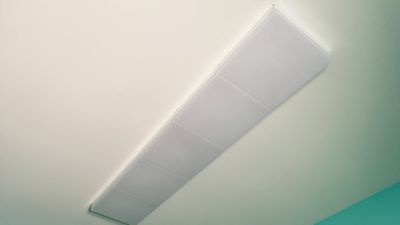
The panels are just under 12 inches on each side, and they're about two inches thick. The plastic is a shinier material than the plastic used for the regular Nanoleaf Light Panels, and it just looks like white squares on the ceiling when the lights are not turned on. I don't mind the plastic because it blends well with a white ceiling when the lights are off. Square-shaped light panels have a modern vibe both on and off, and it isn't an aesthetic that's going to fit in with all decor styles.
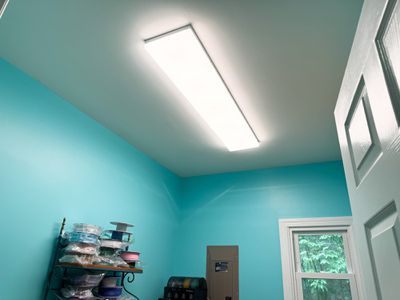
Every panel is 1400 lumens, so the three panel kit is 4200 lumens. The amount of light needed to properly light a space is going to depend on the size of the area being lit and the desired brightness, but that should be enough light for a 15x15 room with 10 foot ceilings. I was impressed with the brightness of the Skylight panels, and three installed in my laundry room was more light than I'll ever need. I ultimately included two more panels for a total of five, but that was because I was replacing a fluorescent panel with popcorn texture underneath and I didn't want to have to repair the ceiling. I think my laundry room is now the brightest room in the house, and I use the lights dimmed down.
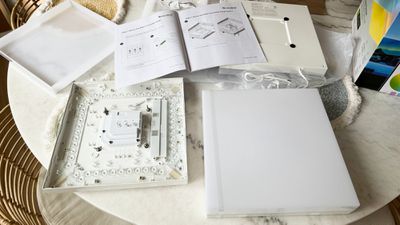
The Skylight can be installed by an electrician or as a DIY project with some basic electrical knowledge, and Nanoleaf does provide instructions and a video for completing the entire process. Creating a layout is the first step, and while the lights can be installed at angles and staggered, I did a straight line of five panels in a row. There's a ceiling plate that's screwed into the ceiling first, and the wires from the ceiling are connected to the main panel (with the breaker off of course). The panels are each two pieces, with a base that houses the LEDs and wires, and a cover.
There's a single Main Controller panel that can control up to 99 additional dependent panels, and that's the one that goes up first. Nanoleaf included four screw holes on each panel that also serve as guides so you can mark on the ceiling where to drill, and drywall anchors and screws are included.
Every panel has a terminal block that's covered by a panel that has to be unscrewed to get to the wires to connect one panel to another, and each panel is secured at all four corners, plus the wires are routed through holes at the sides. It's not difficult, exactly, but there are a lot of steps to go through, and it's frustrating working from below. I do think the guide holes helped a lot ensuring everything was lined up, and it ultimately turned out well.
I think four drywall screws for every panel is a lot, especially because these panels aren't particularly heavy. In hindsight, I probably could have used two at a diagonal, and it's worth noting that there are going to be a lot of holes to repair in the ceiling if you install these panels and later want to remove them.
Once installed, the Skylight works like any other HomeKit-connected light. It's added to HomeKit with a HomeKit code, and setup is quick. Nanoleaf products only work with 2.4GHz networks, so you're going to need a setup that allows for a 2.4GHz connection. The Skylight is Wi-Fi only, but there it has Thread compatibility that can presumably be turned on if Nanoleaf decides to do so. It is not Matter-enabled.
I don't own a single smart home product that does not occasionally have a connectivity issue, including Nanoleaf devices. When I got these panels, I debated installing the panels in my living room with vaulted ceilings (note: these can be installed on angled ceilings), but I was worried about access for troubleshooting because I'd need a tall, heavy ladder, so I tested the Skylight in one of my only rooms with lower ceilings.
I'm glad I did, because about a week after the Skylight was up, it lost connectivity. No amount of turning the power off or restarting my devices helped, and I had to get out a small ladder, pull off the main panel's cover, and long press the reset button to start over. I haven't had another disconnect, and it could have been caused by trying to use a motion sensor (I could NOT get it to work reliably and I haven't wanted to try again) or by turning the light off at the switch overnight, but it can happen.
So far the Skylight doesn't seem to be less reliable than other Wi-Fi HomeKit devices or other Nanoleaf panels, but since it's on the ceiling it is decidedly more of a hassle to reset, which is something to keep in mind. I have also seen some complaints about Nanoleaf's customer service on Reddit and on Facebook, and while I haven't had a catastrophic product failure requiring help, I know some people have had issues getting support and replacements. Note that those complaints are more focused on the light panels than the Skylights, but I don't want to ignore potential customer service issues that could be a problem for some.
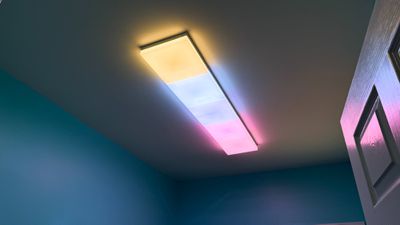
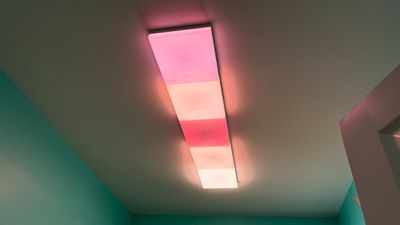
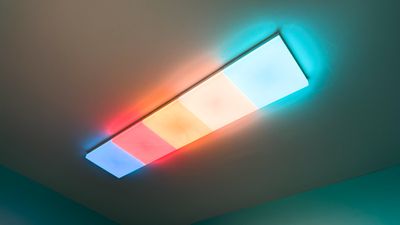
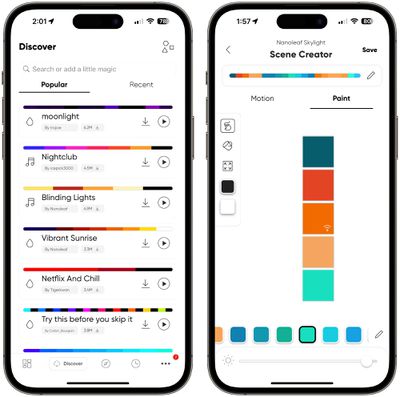
Each Skylight panel can be individually controlled with the Nanoleaf app and set to a different color or combination of colors and patterns. There are pre-designed options, plus tools for creating custom designs, and a section for downloading designs created by other Nanoleaf users.
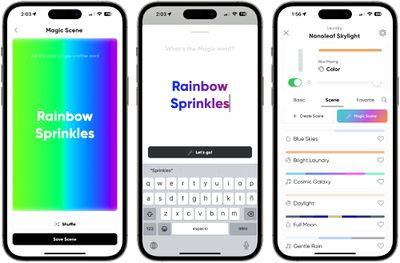
The Skylight has some unique pre-created patterns like Sun Shower and Shooting Stars that work particularly well on the ceiling, and there are window-style scenes like Blue Skies. The LEDs support 16 million colors and shades of white ranging from blue to yellow, plus there are more than 10 lighting patterns to use to shift between colors. There's also a rhythm feature that changes the color of the lights based on music or sound, and a fun AI option that creates a scene based on a typed phrase like "ocean waves" or "pink sunset."
Colors on the light look best when in motion, and for some shades, there are dark and light spots that cause some unevenness. If you've used Nanoleaf's light panels on the wall, it's a similar effect, but it's something that you get used to and notice less with ceiling lights.
I think multicolored lighting works well for accent lights, but I am less sure of it for light that provides as much illumination as the Skylight does. Setting the Skylight to a color like red, for example, means the room is RED and not outfitted with a tasteful red accent light in one area. Patterns that shift quickly can be almost overwhelming, and I don't like the music feature with the Skylight for that reason. I prefer to set the Skylight to softer, more pastel hues and warm whites, but it can definitely provide the ultimate mood lighting and set ambiance for movies and video games.
There's one other thing that I want to mention before wrapping up this review, and that's control. This is a ceiling light that is connected to a light switch, and I don't have a good way to turn that light switch into a smart switch that can be used for changing colors, dimming, or even turning the light on and off. Nanoleaf doesn't have a switch, and there are a limited number of full light switch replacements for a situation like this.
I have a Lutron Caseta hub and system, but adding a Lutron smart light switch isn't a good idea because the Nanoleaf Skylight needs a constant connection and it's not an on/off situation. There are plenty of smart buttons, but nothing that seems to be designed to replace a light switch. For Hue lights, I solve this issue with the Lutron Aurora Dimmer Switches, but those are designed to work with the Hue app and not HomeKit in general. I need a physical button for the Skylight that also prevents the existing switch from being flipped, and I'm not sure how to solve that issue right now.
Nanoleaf does have Sense+ smart switches that it has been working on since 2023, but I'm not sure when these are set to come out.
Bottom Line
Nanoleaf's Skylight is expensive and not without flaws, but it's also a one-of-a-kind product. It's modular so you can tune the number of panels to fit your space, it supports white and yellow light along with any color of the rainbow, and there are endless scenes and effects to play with.
The Skylight's design isn't going to resonate with everyone, but for those who want a modern feel and who love color, it's worth checking out.







 Note: MacRumors is an affiliate partner with Amazon. When you click a link and make a purchase, we may receive a small payment, which helps us keep the site running.